Nostradamus Predictions 2026: Threat of World War 3: US-Israel-Iran War

Nostradamus, born as Michel de Nostredame, was
not only a pharmacist but also one of the most famous seers in history. In his
world-renowned Quatrains, written as early as 1544, he described a
future in which certain individuals would emerge who carry both good and evil
within them—people capable of shaping the fate of the world in both destructive
and positive ways.
Among these mysterious figures, two names stand
out: the “Antichrist” and Chiren. These are not just names but symbols
of two completely different visions of the world. The Antichrist represents
chaos, conflict, and destruction, while Chiren represents balance,
leadership, and ultimately peace. According to many interpretations, these two
forces are destined to appear around the same period in history.
Is Donald
Trump the Antichrist? A Controversial Interpretation
One of the most debated questions today is
whether a modern political figure could fit the role of the Antichrist
described by Nostradamus. In this context, the name of Donald Trump often comes
up.
Donald Trump is seen by supporters as a strong
and decisive leader but by critics as a figure who has contributed to
division, tension, and conflict both within the United States and
internationally. His rhetoric, policies, and influence on global politics have
made him one of the most polarising figures of our time.
It is important to say clearly that linking Trump
to the Antichrist is a speculative and controversial interpretation, not a
proven fact. However, the comparison arises because Nostradamus described
someone who would influence large-scale conflict and disrupt the global order.
For some observers, the parallels—whether real or imagined—are enough to raise
questions.
Religion,
Power, and Division in a Modern World
Throughout history, many wars have been rooted in
religious differences. Conflicts between belief systems—whether between
Christianity, Islam, or other faiths—have shaped civilizations and caused deep
divisions.
Donald Trump is often described as a strong
Christian figure. He was raised Presbyterian and has publicly identified as a
Christian, even appearing on television holding a Bible shortly after becoming
president. At the same time, he stated in 2020 that he no longer formally
aligns himself with a specific church or denomination.
This creates an interesting contradiction.
Religion plays a visible role in his public image, yet his personal beliefs
remain somewhat unclear. In a world where religion can unite but also divide,
the beliefs of powerful leaders can have significant global consequences.
Questions
About Faith, Gnosticism, and Belief
Another question that arises is whether Trump
believes in a traditional concept of God or religion at all. He is known to
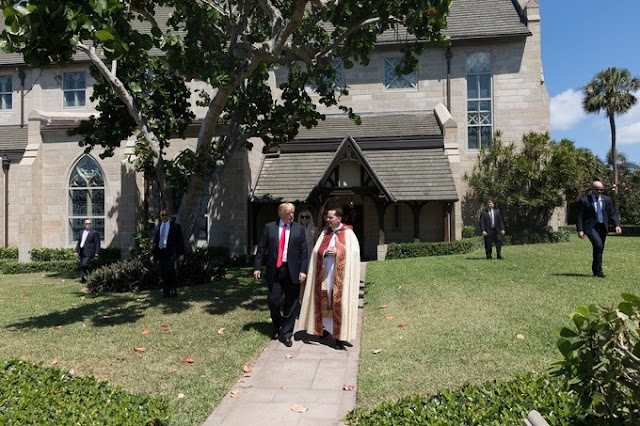
attend services at an Episcopal church in Florida, which some associate—rightly
or wrongly—with elements of Gnostic thought.
Gnosticism is a belief system that differs from
mainstream Christianity. It emphasizes inner knowledge and personal spiritual
experience rather than strict adherence to traditional doctrine. Some
interpretations even challenge the historical existence of Jesus Christ, which
stands in contrast to widely accepted Christian beliefs.
If a world leader were influenced by such ideas,
it could shape how they view morality, conflict, and other nations. This leads
some to speculate: does Trump act מתוך religious conviction, personal belief,
or primarily from a sense of power and self-interest?
Are We on the
Brink of World War 3?
The growing tension in global politics has led
many people to ask whether we are approaching a third world war. Governments,
including in Europe, have issued warnings about increasing instability and the
possibility of long-term conflict.
Nostradamus’ prediction of a “very long war”
resonates strongly in this context. While it is impossible to confirm whether
his writings truly predict modern events, the parallels are striking enough to
keep the discussion alive.
At the same time, history shows that fear of
global war has existed in many different periods. Not every crisis leads to
worldwide conflict. Still, the combination of political tension, military
power, and ideological division makes the question more relevant than ever.
Chiren: The
Hope for Peace After Chaos
While much attention is given to the Antichrist,
Nostradamus also described a second figure: Chiren. This figure is often
overlooked, yet it may be the most important part of his prophecy.
According to interpretations, Chiren would
be a European leader, possibly from France, who rises during or after a period
of great suffering and war. Unlike the Antichrist, Chiren represents
restoration, wisdom, and long-term peace.
The idea of Chiren suggests that even in
the darkest times, there is the possibility of renewal. Where the Antichrist
divides, Chiren unites. Where one brings conflict, the other brings
stability.
Hope in Dark
Times: A Message Beyond Fear
Despite the heavy themes of war and conflict,
both Nostradamus’ writings and religious texts offer a message of hope. The
Qur’an states in Surah 94: “Verily, with hardship comes ease.”
This idea is echoed in the concept of Chiren.
No matter how intense the chaos may become, it will not last forever. Periods
of suffering are followed by periods of recovery and peace.
Whether one believes in prophecy or not, this
message remains powerful. The future is not fixed, and humanity continues to
shape its own destiny. The question is not only whether Nostradamus was right but how we respond to the challenges of our time.